Share Statewide Bicycle+ System Plan on FacebookShare Statewide Bicycle+ System Plan on X (formerly Twitter)Share Statewide Bicycle+ System Plan on LinkedinEmail Statewide Bicycle+ System Plan link
Image Credit: Waqar Ahmad
Recent Project Updates
The public comment period for the draft Statewide Bicycle+ System Plan has now closed. Thank you for your participation! Please sign up for the project email list to receive future updates.
Introduction
Minnesota has a long and proud history as one of our country's most bicycle friendly states. The Statewide Bicycle+ System Plan (Bike+ Plan) is a guiding document to help Minnesota continue to improve.
A lot has changed sincethe statewide bicycle plan was last updated in 2016 (PDF). Many more people began bicycling for transportation and recreation during the COVID-19 pandemic. More people are using newer transportation devices including scooters, e-bikes, and e-skateboards in communities across Minnesota.
The 2016 plan and the District Bicycle Plans establishedtheStatewide Bicycle Route Network, a network of envisioned connections that link destinations throughout the state by bicycle.The statewide priority corridors are not anticipated to change as part of this update. Instead, this update will build on the previous plans to identify and remove barriers at MnDOT that make it harder to build safe, comfortable, convenient places to bike.
The updated Bike+ Plan will develop vision, goals, and strategies for MnDOT’s role in supporting bicycling and bike-like modes statewide.
Why the +?
The Bike+ Plan includes bikes + bike-like modes. Bike-like modes are other human scale transportation devices that share a similar mass and velocity (kinetic energy, yay science!) to people on bicycles and include folks who are already legally using most types of bicycle facilities found in Minnesota.
Bike-like modes = conventional and electric foot scooters, skateboards, unicycles, etc.
Goals
This plan will align with state transportation policy including Minnesota GO, reflect evolving trends and conditions, and aim to achieve the following goals:
Create safer and more enjoyable places to bike in Minnesota
Identify MnDOT's role in improving bikeways on Trunk Highways, routes that cross Trunk Highways, and facilitating local and regional efforts
Build internal capacity within MnDOT to advance biking
Develop an understanding of current and emerging trends with e-bikes and bike-like devices
Get Engaged
Ask us a question.
During the first phase of engagement, MnDOT talked to community members throughout Minnesota to learn how they currently bike or use bike-like modes, and what barriers they encounter. This included 15 pop-up events throughout the state, meetings with the Diverse Bicycling Perspectives (DBP) advisory group, and feedback from more than 1,176 survey respondents. Below is a summary of what we heard from people who bike or use bike-like modes:
Minnesotans' motivations to ride:
Health: Many associated biking with being physically active, healthy, and feeling mentally refreshed; describing it as stress-relieving because of physical movement and a connection to nature.
Fun: Community members highlighted biking and using bike-like modes as a social activity that allows them to spend time outdoors with friends and family. Many described it as a relaxing, enjoyable way to travel, and emphasized that routes where people can bike together comfortably help sustain interest in biking.
Convenience: High-quality, well-maintained trails and bicycle facilities support biking and bike-like modes as a comfortable and enjoyable option. Many community members shared that e-bikes made it easier, faster, and more enjoyable to bike further and navigate challenging terrain.
Minnesotans' barriers to ride:
Safety: Safety concerns remain the most significant barrier for bicycling and using bike-like modes to travel. Many described being uncomfortable on busy roads, unsafe highway crossings, and gaps in protected bicycle facility networks.
Access: Owning, maintaining, and securely storing bicycles and bike-likes modes are critical barriers for many community members. Lack of access to affordable bicycles, repair services, or safe bicycle parking limited their ability to ride.
Connectivity: A lack of continuous bicycle trails and bicycle infrastructure is a significant barrier for community members. A complete network that connects schools, parks, workplaces, and commercial areas is essential for daily travel and recreational use.
We took your feedback and developed eight strategies that will help guide the different short and long-term policies, goals, and outcomes in the plan. We received input on these strategies – which ones you would prioritize, and how well you think they would impact your ability to bike and roll.
Survey closed: July 24, 2026
Bicycle+ System Plan Update Partner Focus Groups
We are seeking community organizations, bicycling and bike-like mode advocacy groups, or recreational groups and clubs to help gather input on the developed strategies by hosting a short group input activity. The format is adaptable and meant to meet community members where they are – your community centers, homes, virtual meeting spaces, or trailheads – with the goal of having more local voices incorporated into the plan.
Does this sound interesting to you or your organization? Please fill out this short form if interested in learning more about this opportunity to share your input and a project team member will reach out to you: Partner Survey
Image Credit: Waqar Ahmad
Recent Project Updates
The public comment period for the draft Statewide Bicycle+ System Plan has now closed. Thank you for your participation! Please sign up for the project email list to receive future updates.
Introduction
Minnesota has a long and proud history as one of our country's most bicycle friendly states. The Statewide Bicycle+ System Plan (Bike+ Plan) is a guiding document to help Minnesota continue to improve.
A lot has changed sincethe statewide bicycle plan was last updated in 2016 (PDF). Many more people began bicycling for transportation and recreation during the COVID-19 pandemic. More people are using newer transportation devices including scooters, e-bikes, and e-skateboards in communities across Minnesota.
The 2016 plan and the District Bicycle Plans establishedtheStatewide Bicycle Route Network, a network of envisioned connections that link destinations throughout the state by bicycle.The statewide priority corridors are not anticipated to change as part of this update. Instead, this update will build on the previous plans to identify and remove barriers at MnDOT that make it harder to build safe, comfortable, convenient places to bike.
The updated Bike+ Plan will develop vision, goals, and strategies for MnDOT’s role in supporting bicycling and bike-like modes statewide.
Why the +?
The Bike+ Plan includes bikes + bike-like modes. Bike-like modes are other human scale transportation devices that share a similar mass and velocity (kinetic energy, yay science!) to people on bicycles and include folks who are already legally using most types of bicycle facilities found in Minnesota.
Bike-like modes = conventional and electric foot scooters, skateboards, unicycles, etc.
Goals
This plan will align with state transportation policy including Minnesota GO, reflect evolving trends and conditions, and aim to achieve the following goals:
Create safer and more enjoyable places to bike in Minnesota
Identify MnDOT's role in improving bikeways on Trunk Highways, routes that cross Trunk Highways, and facilitating local and regional efforts
Build internal capacity within MnDOT to advance biking
Develop an understanding of current and emerging trends with e-bikes and bike-like devices
Get Engaged
Ask us a question.
During the first phase of engagement, MnDOT talked to community members throughout Minnesota to learn how they currently bike or use bike-like modes, and what barriers they encounter. This included 15 pop-up events throughout the state, meetings with the Diverse Bicycling Perspectives (DBP) advisory group, and feedback from more than 1,176 survey respondents. Below is a summary of what we heard from people who bike or use bike-like modes:
Minnesotans' motivations to ride:
Health: Many associated biking with being physically active, healthy, and feeling mentally refreshed; describing it as stress-relieving because of physical movement and a connection to nature.
Fun: Community members highlighted biking and using bike-like modes as a social activity that allows them to spend time outdoors with friends and family. Many described it as a relaxing, enjoyable way to travel, and emphasized that routes where people can bike together comfortably help sustain interest in biking.
Convenience: High-quality, well-maintained trails and bicycle facilities support biking and bike-like modes as a comfortable and enjoyable option. Many community members shared that e-bikes made it easier, faster, and more enjoyable to bike further and navigate challenging terrain.
Minnesotans' barriers to ride:
Safety: Safety concerns remain the most significant barrier for bicycling and using bike-like modes to travel. Many described being uncomfortable on busy roads, unsafe highway crossings, and gaps in protected bicycle facility networks.
Access: Owning, maintaining, and securely storing bicycles and bike-likes modes are critical barriers for many community members. Lack of access to affordable bicycles, repair services, or safe bicycle parking limited their ability to ride.
Connectivity: A lack of continuous bicycle trails and bicycle infrastructure is a significant barrier for community members. A complete network that connects schools, parks, workplaces, and commercial areas is essential for daily travel and recreational use.
We took your feedback and developed eight strategies that will help guide the different short and long-term policies, goals, and outcomes in the plan. We received input on these strategies – which ones you would prioritize, and how well you think they would impact your ability to bike and roll.
Survey closed: July 24, 2026
Bicycle+ System Plan Update Partner Focus Groups
We are seeking community organizations, bicycling and bike-like mode advocacy groups, or recreational groups and clubs to help gather input on the developed strategies by hosting a short group input activity. The format is adaptable and meant to meet community members where they are – your community centers, homes, virtual meeting spaces, or trailheads – with the goal of having more local voices incorporated into the plan.
Does this sound interesting to you or your organization? Please fill out this short form if interested in learning more about this opportunity to share your input and a project team member will reach out to you: Partner Survey
Share I heard about this plan from a friend, and I see there are a lot of great events where feedback is going to be collected. It would be great if your group could come to Mankato's Pride festival on September 6 to collect input! I bet you could get a lot of great thoughts from people of all different ages, abilities, and backgrounds! Thanks for considering! on FacebookShare I heard about this plan from a friend, and I see there are a lot of great events where feedback is going to be collected. It would be great if your group could come to Mankato's Pride festival on September 6 to collect input! I bet you could get a lot of great thoughts from people of all different ages, abilities, and backgrounds! Thanks for considering! on X (formerly Twitter)Share I heard about this plan from a friend, and I see there are a lot of great events where feedback is going to be collected. It would be great if your group could come to Mankato's Pride festival on September 6 to collect input! I bet you could get a lot of great thoughts from people of all different ages, abilities, and backgrounds! Thanks for considering! on LinkedinEmail I heard about this plan from a friend, and I see there are a lot of great events where feedback is going to be collected. It would be great if your group could come to Mankato's Pride festival on September 6 to collect input! I bet you could get a lot of great thoughts from people of all different ages, abilities, and backgrounds! Thanks for considering! link
I heard about this plan from a friend, and I see there are a lot of great events where feedback is going to be collected. It would be great if your group could come to Mankato's Pride festival on September 6 to collect input! I bet you could get a lot of great thoughts from people of all different ages, abilities, and backgrounds! Thanks for considering!
OneCoolCat
asked
over 1 year ago
Thank you for your comment. This opportunity has been passed on to the team that plans our in-person engagement. We appreciate the suggestion!
Share Redo the railings on the Mendota Bridge? No! How much taxpayer money did you spend on those railings over the last 2-3 years? Making them higher now is ridiculous when the money is needed elsewhere. Someone with a lot of influence must want higher railings. As a taxpayer I say NO! on FacebookShare Redo the railings on the Mendota Bridge? No! How much taxpayer money did you spend on those railings over the last 2-3 years? Making them higher now is ridiculous when the money is needed elsewhere. Someone with a lot of influence must want higher railings. As a taxpayer I say NO! on X (formerly Twitter)Share Redo the railings on the Mendota Bridge? No! How much taxpayer money did you spend on those railings over the last 2-3 years? Making them higher now is ridiculous when the money is needed elsewhere. Someone with a lot of influence must want higher railings. As a taxpayer I say NO! on LinkedinEmail Redo the railings on the Mendota Bridge? No! How much taxpayer money did you spend on those railings over the last 2-3 years? Making them higher now is ridiculous when the money is needed elsewhere. Someone with a lot of influence must want higher railings. As a taxpayer I say NO! link
Redo the railings on the Mendota Bridge? No! How much taxpayer money did you spend on those railings over the last 2-3 years? Making them higher now is ridiculous when the money is needed elsewhere. Someone with a lot of influence must want higher railings. As a taxpayer I say NO!
What does this mean?
asked
over 1 year ago
Thank you for your comment. If you would like to learn more or ask questions about the Mendota Bridge railing project, please visit the project page. You can find an email to reach out to and a comment form on the "Contacts" tab. When you say "the money is needed elsewhere," could you please share what kinds of bicycle infrastructure you think should be invested in over projects like the Mendota Bridge railings?
Share Would it be possible for MnDOT to coordinate projects? This summer has had a huge number of river crossing bridges closed to bike/pedestrian usage (of course, vehicle access remains open). One such closure wouldn't be a huge issue, but when more than half the river crossings are closed to bike/ped access, that is a big problem and really disrupts our summer adventures. https://streets.mn/2025/04/08/closed-bridges-how-to-bike-across-a-river-in-2025/ on FacebookShare Would it be possible for MnDOT to coordinate projects? This summer has had a huge number of river crossing bridges closed to bike/pedestrian usage (of course, vehicle access remains open). One such closure wouldn't be a huge issue, but when more than half the river crossings are closed to bike/ped access, that is a big problem and really disrupts our summer adventures. https://streets.mn/2025/04/08/closed-bridges-how-to-bike-across-a-river-in-2025/ on X (formerly Twitter)Share Would it be possible for MnDOT to coordinate projects? This summer has had a huge number of river crossing bridges closed to bike/pedestrian usage (of course, vehicle access remains open). One such closure wouldn't be a huge issue, but when more than half the river crossings are closed to bike/ped access, that is a big problem and really disrupts our summer adventures. https://streets.mn/2025/04/08/closed-bridges-how-to-bike-across-a-river-in-2025/ on LinkedinEmail Would it be possible for MnDOT to coordinate projects? This summer has had a huge number of river crossing bridges closed to bike/pedestrian usage (of course, vehicle access remains open). One such closure wouldn't be a huge issue, but when more than half the river crossings are closed to bike/ped access, that is a big problem and really disrupts our summer adventures. https://streets.mn/2025/04/08/closed-bridges-how-to-bike-across-a-river-in-2025/ link
Would it be possible for MnDOT to coordinate projects? This summer has had a huge number of river crossing bridges closed to bike/pedestrian usage (of course, vehicle access remains open). One such closure wouldn't be a huge issue, but when more than half the river crossings are closed to bike/ped access, that is a big problem and really disrupts our summer adventures. https://streets.mn/2025/04/08/closed-bridges-how-to-bike-across-a-river-in-2025/
MLB
asked
over 1 year ago
Thank you for your question and sharing this helpful link. A significant part of MnDOT's initial work on the Statewide Bicycle+ System Plan is to deepen the agency's understanding of the barriers people who bike face and how to better address them in the future. In our analysis, we'll consider how coordination of construction and maintenance projects can better incorporate needs of bicycle users to cross barriers (including barriers that have historically been addressed, such as with existing bridges and other infrastructure).
This plan will not provide recommendations for specific areas, such as the crossings over the Mississippi River. To learn more, express concerns, or ask questions about the noted infrastructure, please contact MnDOT Metro District's Information Center(External link).
Share What considerations are being made with transit + bike options in mind? Particularly I'm wondering if working with Metro Transit or other train organizations (future trains to Duluth) to get more bike racks on these systems. I Loved traveling around the UK via train and bike and it worked so well together. Having good connections and infrastructure, racks and designated covered/rest space included, should be considered! on FacebookShare What considerations are being made with transit + bike options in mind? Particularly I'm wondering if working with Metro Transit or other train organizations (future trains to Duluth) to get more bike racks on these systems. I Loved traveling around the UK via train and bike and it worked so well together. Having good connections and infrastructure, racks and designated covered/rest space included, should be considered! on X (formerly Twitter)Share What considerations are being made with transit + bike options in mind? Particularly I'm wondering if working with Metro Transit or other train organizations (future trains to Duluth) to get more bike racks on these systems. I Loved traveling around the UK via train and bike and it worked so well together. Having good connections and infrastructure, racks and designated covered/rest space included, should be considered! on LinkedinEmail What considerations are being made with transit + bike options in mind? Particularly I'm wondering if working with Metro Transit or other train organizations (future trains to Duluth) to get more bike racks on these systems. I Loved traveling around the UK via train and bike and it worked so well together. Having good connections and infrastructure, racks and designated covered/rest space included, should be considered! link
What considerations are being made with transit + bike options in mind? Particularly I'm wondering if working with Metro Transit or other train organizations (future trains to Duluth) to get more bike racks on these systems. I Loved traveling around the UK via train and bike and it worked so well together. Having good connections and infrastructure, racks and designated covered/rest space included, should be considered!
Mel Bernstein
asked
over 1 year ago
Thank you for your question. A significant part of MnDOT's upcoming work on the Statewide Bicycle+ System Plan is to explore policy changes that will eliminate barriers for people traveling around Minnesota via bicycle. We'll be sure to consider coordination and support for local and regional transit providers in our analysis.
Share MN 51 / Snelling is a critical piece of infrastructure that runs through the center of St. Paul. As one of the only routes over the Midway train yard, it has a barely 24 inch wide sidewalk with no protection from the cars that are going 40+ mph inches away. What will be done to provide safer transit for bikes and pedestrians over this critical area? on FacebookShare MN 51 / Snelling is a critical piece of infrastructure that runs through the center of St. Paul. As one of the only routes over the Midway train yard, it has a barely 24 inch wide sidewalk with no protection from the cars that are going 40+ mph inches away. What will be done to provide safer transit for bikes and pedestrians over this critical area? on X (formerly Twitter)Share MN 51 / Snelling is a critical piece of infrastructure that runs through the center of St. Paul. As one of the only routes over the Midway train yard, it has a barely 24 inch wide sidewalk with no protection from the cars that are going 40+ mph inches away. What will be done to provide safer transit for bikes and pedestrians over this critical area? on LinkedinEmail MN 51 / Snelling is a critical piece of infrastructure that runs through the center of St. Paul. As one of the only routes over the Midway train yard, it has a barely 24 inch wide sidewalk with no protection from the cars that are going 40+ mph inches away. What will be done to provide safer transit for bikes and pedestrians over this critical area? link
MN 51 / Snelling is a critical piece of infrastructure that runs through the center of St. Paul. As one of the only routes over the Midway train yard, it has a barely 24 inch wide sidewalk with no protection from the cars that are going 40+ mph inches away. What will be done to provide safer transit for bikes and pedestrians over this critical area?
Ian
asked
over 1 year ago
Thank you for your question. A significant part of MnDOT's initial work on the Statewide Bicycle+ System Plan is to deepen the agency's understanding of the barriers people who bike face and how to better address them on our trunk highway system in the future.
This plan will not provide recommendations for specific areas, such as the crossing of the Midway train yard. To learn more, express concerns, or ask questions about the noted infrastructure, please contact MnDOT Metro District's Information Center.
Share Will MnDOT increase cooperation with Mn State Patrol on training them further on unsafe driving behaviors on mixed-use rural highways or encourage more TZD grants on this on FacebookShare Will MnDOT increase cooperation with Mn State Patrol on training them further on unsafe driving behaviors on mixed-use rural highways or encourage more TZD grants on this on X (formerly Twitter)Share Will MnDOT increase cooperation with Mn State Patrol on training them further on unsafe driving behaviors on mixed-use rural highways or encourage more TZD grants on this on LinkedinEmail Will MnDOT increase cooperation with Mn State Patrol on training them further on unsafe driving behaviors on mixed-use rural highways or encourage more TZD grants on this link
Will MnDOT increase cooperation with Mn State Patrol on training them further on unsafe driving behaviors on mixed-use rural highways or encourage more TZD grants on this
Rockie
asked
over 1 year ago
Thank you for your question. We'll be sure to consider how coordination with law enforcement and traffic safety programming can be incorporated into our plan, especially in rural/Greater Minnesota contexts.
Share Can finishing connections between routes be prioritized? There are so many links in several of the systems that nearly connect with other nearby links that get frustrating. One in particular that I've been using a lot lately is 20th Av S to Hwy 55 Greenway where there is a baffling 1 block gap at Franklin and Cedar. But there are SO many instances like it all over the system that must be taken care of. I also understand that those two sections are probably in two different systems but development with those other systems appears to be part of the problem maybe? on FacebookShare Can finishing connections between routes be prioritized? There are so many links in several of the systems that nearly connect with other nearby links that get frustrating. One in particular that I've been using a lot lately is 20th Av S to Hwy 55 Greenway where there is a baffling 1 block gap at Franklin and Cedar. But there are SO many instances like it all over the system that must be taken care of. I also understand that those two sections are probably in two different systems but development with those other systems appears to be part of the problem maybe? on X (formerly Twitter)Share Can finishing connections between routes be prioritized? There are so many links in several of the systems that nearly connect with other nearby links that get frustrating. One in particular that I've been using a lot lately is 20th Av S to Hwy 55 Greenway where there is a baffling 1 block gap at Franklin and Cedar. But there are SO many instances like it all over the system that must be taken care of. I also understand that those two sections are probably in two different systems but development with those other systems appears to be part of the problem maybe? on LinkedinEmail Can finishing connections between routes be prioritized? There are so many links in several of the systems that nearly connect with other nearby links that get frustrating. One in particular that I've been using a lot lately is 20th Av S to Hwy 55 Greenway where there is a baffling 1 block gap at Franklin and Cedar. But there are SO many instances like it all over the system that must be taken care of. I also understand that those two sections are probably in two different systems but development with those other systems appears to be part of the problem maybe? link
Can finishing connections between routes be prioritized? There are so many links in several of the systems that nearly connect with other nearby links that get frustrating. One in particular that I've been using a lot lately is 20th Av S to Hwy 55 Greenway where there is a baffling 1 block gap at Franklin and Cedar. But there are SO many instances like it all over the system that must be taken care of. I also understand that those two sections are probably in two different systems but development with those other systems appears to be part of the problem maybe?
NS St Paul
asked
over 1 year ago
Thank you for your question. This is a great suggestion. We'll be sure to consider how network connectivity and completeness can be incorporated into our plan.
Share What’s the plan for MN 55?
Terribly designed and overbuilt as Olson and, particularly, Hiawatha through MPLS for all traffic, particularly bicyclists. on FacebookShare What’s the plan for MN 55?
Terribly designed and overbuilt as Olson and, particularly, Hiawatha through MPLS for all traffic, particularly bicyclists. on X (formerly Twitter)Share What’s the plan for MN 55?
Terribly designed and overbuilt as Olson and, particularly, Hiawatha through MPLS for all traffic, particularly bicyclists. on LinkedinEmail What’s the plan for MN 55?
Terribly designed and overbuilt as Olson and, particularly, Hiawatha through MPLS for all traffic, particularly bicyclists. link
What’s the plan for MN 55?
Terribly designed and overbuilt as Olson and, particularly, Hiawatha through MPLS for all traffic, particularly bicyclists.
Kens
asked
over 1 year ago
Thank you for your question. The Statewide Bicycle+ System Plan will seek to provide better guidance to the teams at MnDOT who conduct the investment, design, engineering, construction, and maintenance of our state highway system, specifically in how to improve incorporation of bikes and bike-like modes into those activities. This plan aims to improve the experience of bicycling in Minnesota overall, however, will not directly address specific upcoming projects or corridors (such as MN-55).
Share E bikes have gotten heavier and faster, creating hazardous traffic on trails. Will the Plan limit the use of clutch- driven, throttle- controlled e-bikes on trails? on FacebookShare E bikes have gotten heavier and faster, creating hazardous traffic on trails. Will the Plan limit the use of clutch- driven, throttle- controlled e-bikes on trails? on X (formerly Twitter)Share E bikes have gotten heavier and faster, creating hazardous traffic on trails. Will the Plan limit the use of clutch- driven, throttle- controlled e-bikes on trails? on LinkedinEmail E bikes have gotten heavier and faster, creating hazardous traffic on trails. Will the Plan limit the use of clutch- driven, throttle- controlled e-bikes on trails? link
E bikes have gotten heavier and faster, creating hazardous traffic on trails. Will the Plan limit the use of clutch- driven, throttle- controlled e-bikes on trails?
pknapp
asked
over 1 year ago
Thank you for your question. No, limiting or restricting the use of certain types of vehicles is not in the scope of the planning process.
However, it's worth noting that MnDOT is planning based on the legal definition of an e-bike. (For the definition of an e-bike in Minnesota statute, see Section 169.011 Subd. 27.) The final planning document will include concerns related to illegal electric bicycle usage.
A final note that some trails in Minnesota are owned, maintained, and managed by the Minnesota Department of Natural Resources, which has separate guidance for e-bike use on State Trails.
Share Can Mpls keep resurfacing a lot of there black top bike trails instead of closing many bridges that many of us use to bike around Mpls forc6 months during the summer. For instance #9 bridge at the u of mn which is a pedestrian bridge for bikes and walkers….that was stupid
Plymouth Ave bridge in Mpls…make it available on one lane. Instead of closing it for the entire summer of bike ridding. the stone arch bridge that is used for bikers and walkers…it gets such heavy use that it has to close it for two years. Sad.
Minnehaha bike trail from Nokomis to lake Harriett is in such bad shape. Needs fresh new black top. I hate to think how many bridge decks will get replaced next summer…
St. Paul is light years behind Mpls for decent bike trails..I live off the St. Paul River road. What ever happened to that railroad bridge that would extend the greenway…terribley out dated railroad bridge.. also the greenway from the Mpls River road to the Hiawatha bridge needs resurfacing with many black top separations… on FacebookShare Can Mpls keep resurfacing a lot of there black top bike trails instead of closing many bridges that many of us use to bike around Mpls forc6 months during the summer. For instance #9 bridge at the u of mn which is a pedestrian bridge for bikes and walkers….that was stupid
Plymouth Ave bridge in Mpls…make it available on one lane. Instead of closing it for the entire summer of bike ridding. the stone arch bridge that is used for bikers and walkers…it gets such heavy use that it has to close it for two years. Sad.
Minnehaha bike trail from Nokomis to lake Harriett is in such bad shape. Needs fresh new black top. I hate to think how many bridge decks will get replaced next summer…
St. Paul is light years behind Mpls for decent bike trails..I live off the St. Paul River road. What ever happened to that railroad bridge that would extend the greenway…terribley out dated railroad bridge.. also the greenway from the Mpls River road to the Hiawatha bridge needs resurfacing with many black top separations… on X (formerly Twitter)Share Can Mpls keep resurfacing a lot of there black top bike trails instead of closing many bridges that many of us use to bike around Mpls forc6 months during the summer. For instance #9 bridge at the u of mn which is a pedestrian bridge for bikes and walkers….that was stupid
Plymouth Ave bridge in Mpls…make it available on one lane. Instead of closing it for the entire summer of bike ridding. the stone arch bridge that is used for bikers and walkers…it gets such heavy use that it has to close it for two years. Sad.
Minnehaha bike trail from Nokomis to lake Harriett is in such bad shape. Needs fresh new black top. I hate to think how many bridge decks will get replaced next summer…
St. Paul is light years behind Mpls for decent bike trails..I live off the St. Paul River road. What ever happened to that railroad bridge that would extend the greenway…terribley out dated railroad bridge.. also the greenway from the Mpls River road to the Hiawatha bridge needs resurfacing with many black top separations… on LinkedinEmail Can Mpls keep resurfacing a lot of there black top bike trails instead of closing many bridges that many of us use to bike around Mpls forc6 months during the summer. For instance #9 bridge at the u of mn which is a pedestrian bridge for bikes and walkers….that was stupid
Plymouth Ave bridge in Mpls…make it available on one lane. Instead of closing it for the entire summer of bike ridding. the stone arch bridge that is used for bikers and walkers…it gets such heavy use that it has to close it for two years. Sad.
Minnehaha bike trail from Nokomis to lake Harriett is in such bad shape. Needs fresh new black top. I hate to think how many bridge decks will get replaced next summer…
St. Paul is light years behind Mpls for decent bike trails..I live off the St. Paul River road. What ever happened to that railroad bridge that would extend the greenway…terribley out dated railroad bridge.. also the greenway from the Mpls River road to the Hiawatha bridge needs resurfacing with many black top separations… link
Can Mpls keep resurfacing a lot of there black top bike trails instead of closing many bridges that many of us use to bike around Mpls forc6 months during the summer. For instance #9 bridge at the u of mn which is a pedestrian bridge for bikes and walkers….that was stupid
Plymouth Ave bridge in Mpls…make it available on one lane. Instead of closing it for the entire summer of bike ridding. the stone arch bridge that is used for bikers and walkers…it gets such heavy use that it has to close it for two years. Sad.
Minnehaha bike trail from Nokomis to lake Harriett is in such bad shape. Needs fresh new black top. I hate to think how many bridge decks will get replaced next summer…
St. Paul is light years behind Mpls for decent bike trails..I live off the St. Paul River road. What ever happened to that railroad bridge that would extend the greenway…terribley out dated railroad bridge.. also the greenway from the Mpls River road to the Hiawatha bridge needs resurfacing with many black top separations…
Jerry Anderson
asked
over 1 year ago
Thank you for your comment, we've noted it. For information about specific infrastructure projects, please reach out to the public works department of the relevant city, county, or other roadway authority.

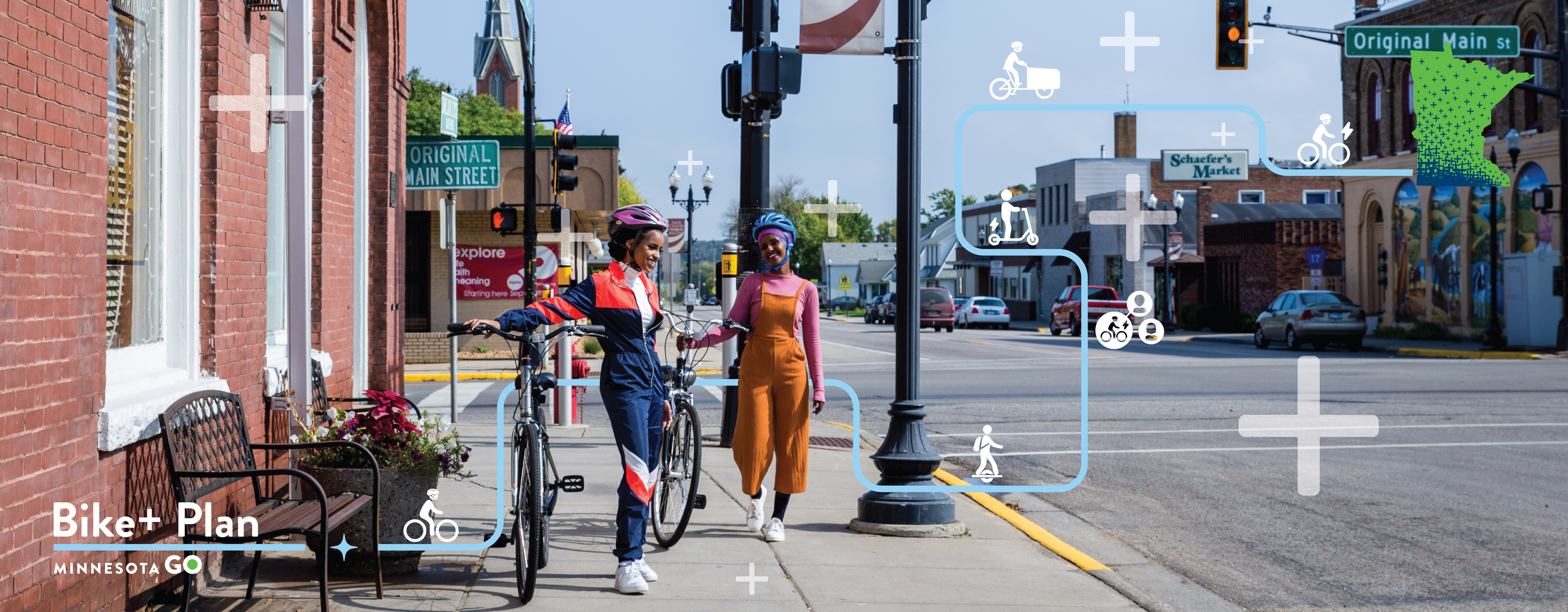 Image Credit: Waqar Ahmad

Thank you for your contribution!
Help us reach out to more people in the community
Share this with family and friends