Hwy 7 study — Hopkins to St. Bonifacius

Share Hwy 7 study — Hopkins to St. Bonifacius on Facebook Share Hwy 7 study — Hopkins to St. Bonifacius on Twitter Share Hwy 7 study — Hopkins to St. Bonifacius on Linkedin Email Hwy 7 study — Hopkins to St. Bonifacius link

Study complete

About this study

WHighway 7 between Hopkins Crossroad and the Western Hennepin County line in St. Bonifacius study location mapView full-size mape have completed a planning study for an 18-mile stretch of Hwy 7 from St. Bonifacius to Hopkins.

We conducted this study to understand travel experiences of those walking, biking and driving on Hwy 7, identify the needs in the study area, and inform future transportation safety and mobility improvements on Hwy 7. The recommendations from this study will inform the design of a pavement resurfacing project planned for 2029 from the Hennepin/Carver County line in St. Bonifacius to Christmas Lake Rd. in Shorewood/Greenwood. Over the past two years, MnDOT worked with local partners and heard from community members to understand transportation needs and identify opportunities for future improvements.

Studies are an important part of transportation planning. They help identify needs, evaluate and recommend concepts to address those needs and allow the public to share their input. Studies do not make final design decisions, instead they guide and inform future transportation improvements the next phase of project development, which is preliminary design.

Read more about the study findings and next steps.

Stay engaged

We need your continued input so that future projects on Hwy 7 will meet the needs for safety, mobility and have better pedestrian/bicycle facilities.

  • Sign up for email updates. If you’re already signed up for email updates from the study, you’ll continue to receive project updates for the preliminary design process scheduled to start later in 2026. If you’re not signed up yet, please sign up to get information on the upcoming project.
  • Leave a comment or question

Study complete

About this study

WHighway 7 between Hopkins Crossroad and the Western Hennepin County line in St. Bonifacius study location mapView full-size mape have completed a planning study for an 18-mile stretch of Hwy 7 from St. Bonifacius to Hopkins.

We conducted this study to understand travel experiences of those walking, biking and driving on Hwy 7, identify the needs in the study area, and inform future transportation safety and mobility improvements on Hwy 7. The recommendations from this study will inform the design of a pavement resurfacing project planned for 2029 from the Hennepin/Carver County line in St. Bonifacius to Christmas Lake Rd. in Shorewood/Greenwood. Over the past two years, MnDOT worked with local partners and heard from community members to understand transportation needs and identify opportunities for future improvements.

Studies are an important part of transportation planning. They help identify needs, evaluate and recommend concepts to address those needs and allow the public to share their input. Studies do not make final design decisions, instead they guide and inform future transportation improvements the next phase of project development, which is preliminary design.

Read more about the study findings and next steps.

Stay engaged

We need your continued input so that future projects on Hwy 7 will meet the needs for safety, mobility and have better pedestrian/bicycle facilities.

  • Sign up for email updates. If you’re already signed up for email updates from the study, you’ll continue to receive project updates for the preliminary design process scheduled to start later in 2026. If you’re not signed up yet, please sign up to get information on the upcoming project.
  • Leave a comment or question
  • Study findings and next steps

    Share Study findings and next steps on Facebook Share Study findings and next steps on Twitter Share Study findings and next steps on Linkedin Email Study findings and next steps link

    The planning study for Hwy 7 from St. Bonifacius to Hopkins has been completed. We conducted this study to understand travel experiences of those walking, biking and driving on Hwy 7, identify the needs in the study area, and inform future transportation safety and mobility improvements on Hwy 7. The recommendations from this study will also inform the design of a pavement resurfacing project planned for 2029 from the Hennepin/Carver County line in St. Bonifacius to Christmas Lake Rd. in Shorewood/Greenwood.

    Who we heard from

    During our public engagement process we heard from thousands of community members: over 6,900 survey responses, over 160 conversations at 5 pop-up events, 58 public meeting attendees, and over 130 emails, phone and webpage submitted comments. We also gave 15 presentations to local agencies and groups.

    Public input was used to develop study needs, develop concepts to address safety and mobility concerns and shape recommended improvements. We are grateful to everyone who participated in this study. Public input helped shape the vision for a safer and more connected Hwy 7.

    Study needs

    Using public input and technical analysis, the study identified three primary needs:

    • Safety for all users
    • Mobility with reliable travel for drivers and transporting goods
    • Walkability and bikeability

    Community priorities matched the study needs. People want safer roads, fewer crashes and less congestion. They also want better options for walking and biking.

    Recommended improvements

    We used current conditions of the highway, study needs and public input to develop a range of improvement ideas or concepts. We collected input on these ideas from the public from May to June and from October to November in 2025. Using public input and evaluation criteria we refined the concepts to those most likely to meet the needs.

    Segment 1 recommendation: a series of roundabouts to improve safety and traffic flow

    Hwy 7 from the Hennepin/Carver County line in St. Bonifacius to Hwy 41 in Shorewood

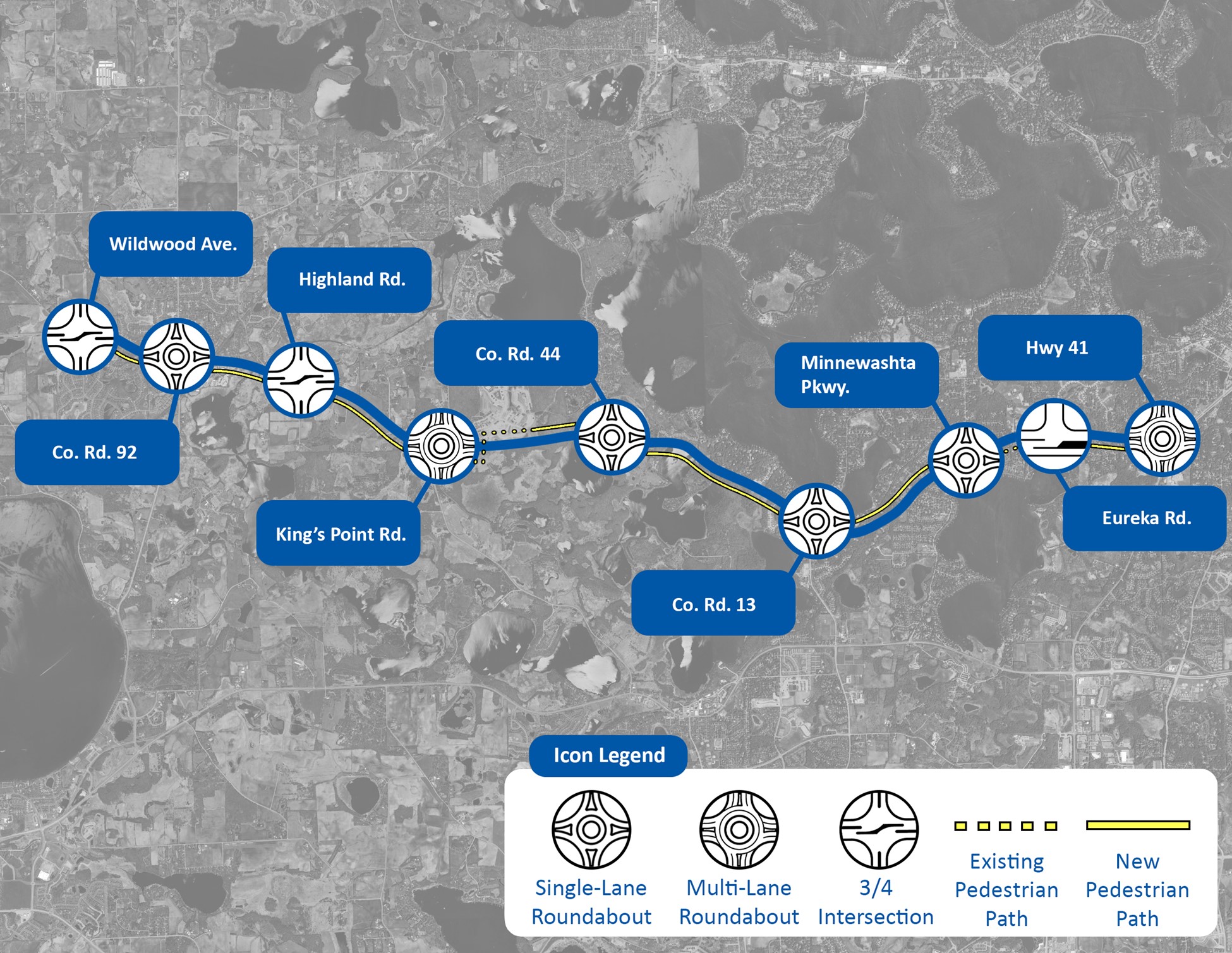
    Map of Segment 1 recommended intersection improvements.View full-size image

    Key features

    • Median barrier between the intersections 
    • ¾ intersection at Wildwood Ave., Highland Rd. and Eureka Rd.
    • Single-lane roundabouts at Hwy 92, Hwy 44, Hwy 13 and Minnewashta Pkwy.
    • Multi-lane roundabouts at King’s Point Rd. and Hwy 41
    • Multi-use trail along the entire segment

    Segment 2 recommendation: a hybrid design with roundabouts and grade-separated intersections to provide long-term mobility

    Hwy 7 from Hwy 41 in Shorewood to the Baker Rd. interchange in Minnetonka

    Map of Segment 2 recommended intersection improvements.View full-size image

    Key features  

    • Multi-lane roundabouts at Hwy 41, Oak St., Christmas Lake Rd. and Old Market Rd. 
    • New interchanges at Co. Rd. 101 and Williston Rd.
    • Grade separations at Vine Hill Rd. and Tonkawood Rd.
    • Two pedestrian bridges (Old Market Rd. and Minnetonka High School)
    • Improved multi-modal connections (sidewalks and trails)

    Read more about these recommendations and implementation plans in the study report (PDF).

    Study report

    Findings are documented in the Study report (PDF) and the Executive summary (PDF).

    What comes next

    There is a planned pavement resurfacing project on Hwy 7 in 2029 from the Hennepin/Carver County line in St. Bonifacius to Christmas Lake Rd. in Shorewood/Greenwood. Recommended improvements from the study that are in the project area will undergo a preliminary design and engineering process for refinement and environmental documentation to determine the final layout. Some elements of the recommended improvements may change as designs are refined. This process will include more opportunities for members of the public and local agencies to give input on designs.

    Recommended improvements from the study that are not in the project area for the 2029 upcoming pavement project will be explored and refined as a part of future projects.

    The study also recommended strategies for funding and coordination with local partners. MnDOT will revisit these plans and recommendations as funding opportunities and priorities evolve.

    Stay engaged

    We need your continued input so that future projects on Hwy 7 will meet the needs for safety, mobility and have better pedestrian/bicycle facilities. If you’re already signed up for email updates from the study, you’ll continue to receive project updates for the preliminary design process scheduled to start later in 2026. If you’re not signed up yet, please sign up to get information on the upcoming project.

  • Recommended improvements

    Share Recommended improvements on Facebook Share Recommended improvements on Twitter Share Recommended improvements on Linkedin Email Recommended improvements link

    Community input and technical analysis were used to evaluate the design alternatives and help select the recommended improvements that are shared below.

    Recommended improvements comment period

    The comment period for the recommended improvements was open to the public from Oct. 22 to Nov. 30, 2025. In total, there were: 

    • 718 responses to the online comment form
    • 70+ discussions held through two community pop-ups 
    • 66 email, phone and webpage submitted comments

    Thank you to everyone who provided comments. Comments were reviewed and will be used to guide future design updates in the study area. Learn more about the study findings and next steps.

    Recommended improvements video

    Learn more about the recommendations by watching the recommended improvements video.


    Segment 1 recommendation: Roundabouts

    Hwy 7 from the Hennepin/Carver County line in St. Bonifacius to Hwy 41 in Shorewood Map of Segment 1 proposed intersection improvements. View full-sizeKey features

    • Median barrier between the intersections 
    • ¾ intersection at Wildwood Ave., Highland Rd. and Eureka Rd.
    • Single-lane roundabouts at Hwy 92, Hwy 44, Hwy 13 and Minnewashta Pkwy.
    • Multi-lane roundabouts at King’s Point Rd. and Hwy 41
    • Multi-use trail along the entire segment
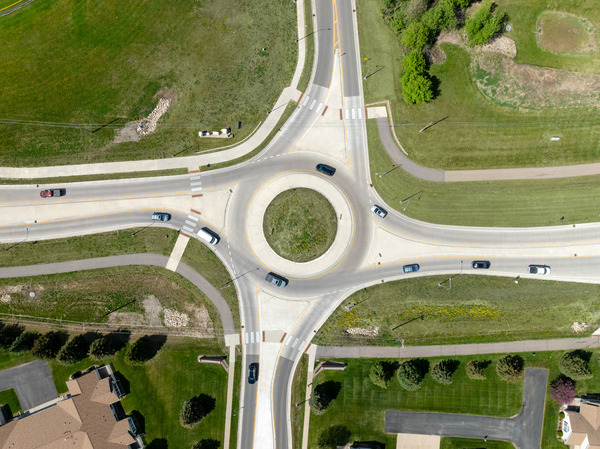
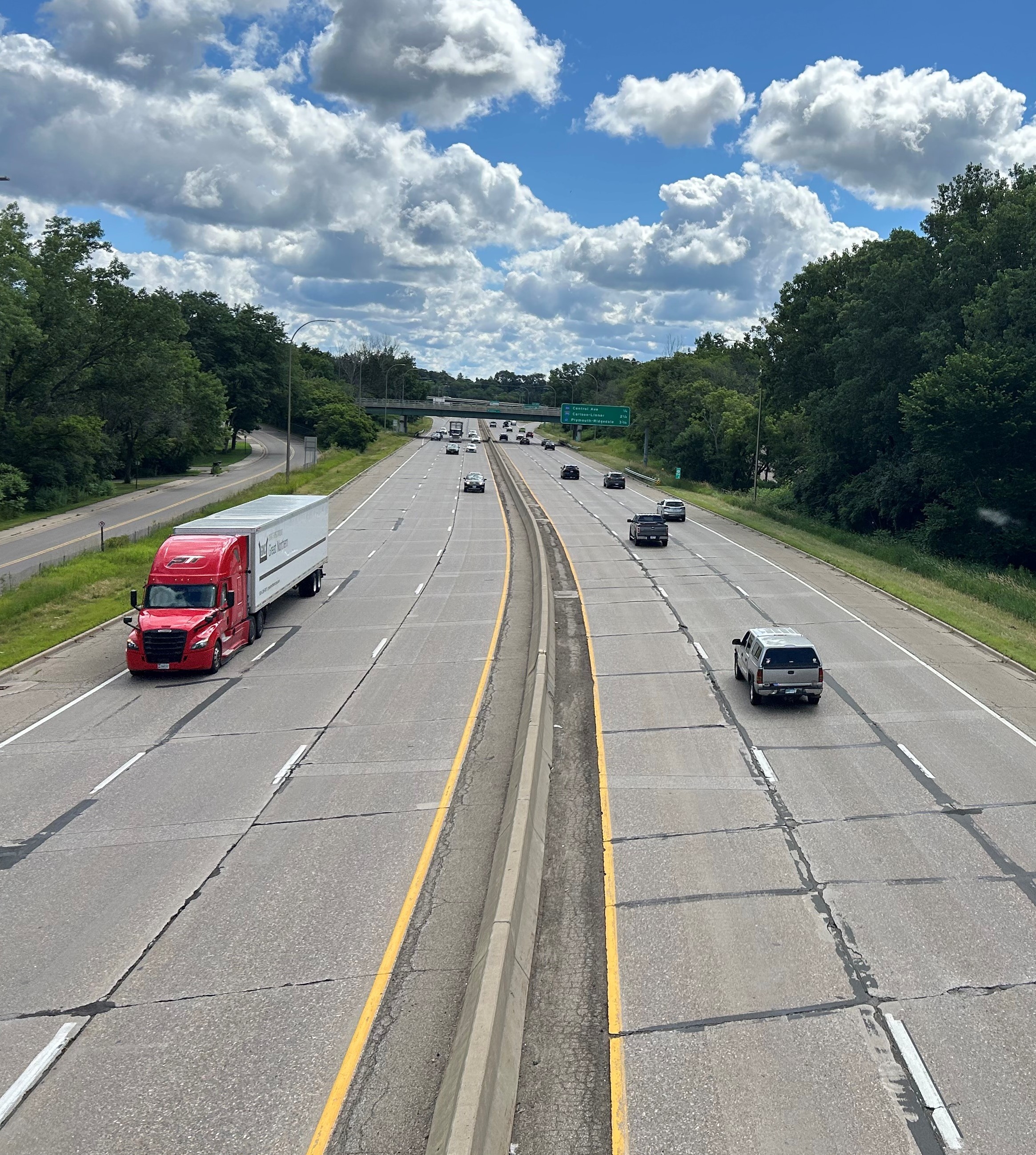
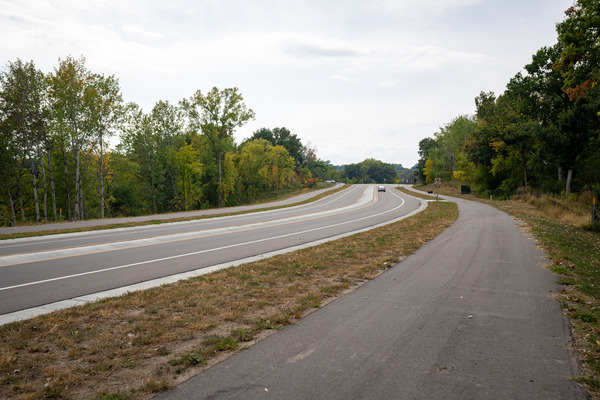
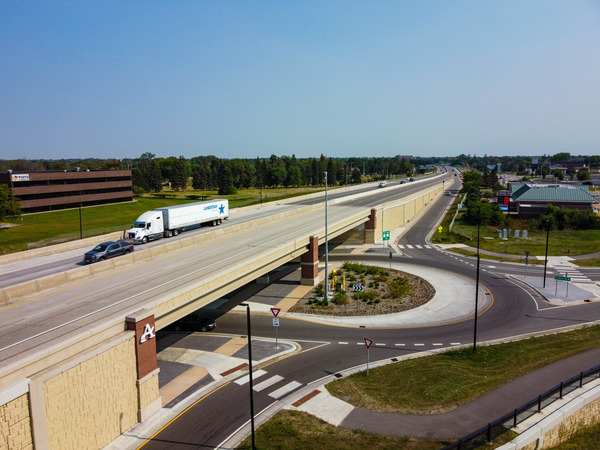
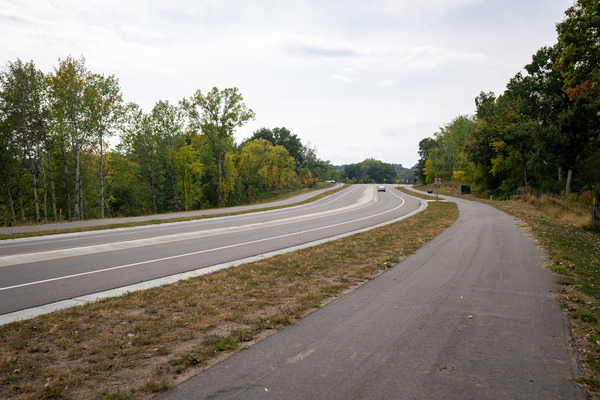
    Image example of a roundabout. Example of a roundabout. Image example of a median barrier between intersections.Example of a median barrier between intersections.Image example of a multi-use trail along a highway.Example of a multi-use trail along the highway. Why was this selected?
    • Roundabouts were selected based on their ability to address the highway’s needs for vehicle safety and mobility, and improvements for walking and biking.
    • Roundabouts are safer intersections for vehicles and pedestrians and help reduce side road delays.
    • A barrier between the traveled lanes on Hwy 7 will improve access control and help reduce dangerous head on, run off the road and right-angle crashes.
    • A trail parallel to Hwy 7 is recommended to enhance connectivity for all transportation modes.


    Segment 2 recommendation: Hybrid with both at-grade and grade-separated intersections. Long term consideration – Grade separated intersections.

    Hwy 7 from Hwy 41 in Shorewood to the Baker Rd. interchange in Minnetonka

    Map of Segment 2 proposed intersection improvements. View full-size imageKey features
    • Multi-lane roundabouts at Hwy 41, Oak St., Christmas Lake Rd. and Old Market Rd. 
    • New interchanges at Co. Rd. 101 and Williston Rd.
    • Grade separations at Vine Hill Rd. and Tonkawood Rd.
    • Two pedestrian bridges (Old Market and Minnetonka High School)
    • Improved multi-modal connections (sidewalks and trails)
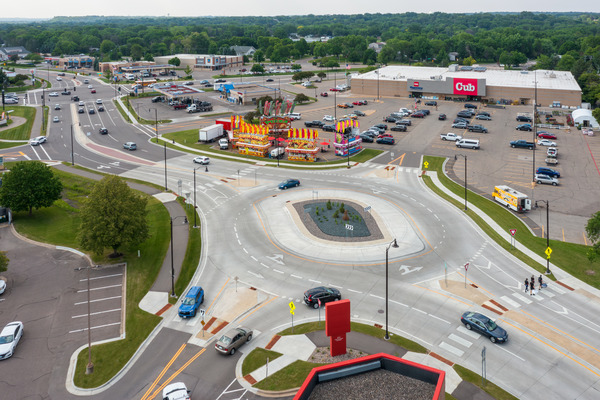
    Image example of a multi-lane roundabout.Example of a multi-lane roundabout.Image example of a grade separation and an interchange.Example of grade separation and an interchange.
    Image example of a multi-use trail along a highway.Example of a multi-use trail along the highway.
    Why was this selected?
    • The hybrid option was recommended as the preferred alternative because it addresses highway needs by enhancing vehicle mobility, improving traffic safety and offering safer pedestrian crossing opportunities.
    • The hybrid option aligns proposed improvements with current traffic volumes by prioritizing grade-separated solutions in areas identified as having the greatest need.
    • Full freeway conversion could be considered long-term if Hwy 7 traffic keeps increasing.
    • Recommendations include new connections and improved crossing opportunities for bicycles and pedestrians.

    Next steps

    Following the public comment period, comments on the recommended improvements were reviewed and summarized. The study team will adjusted the recommended improvements as needed, finalized documentation and prepared the final study report.

    After the study is completed, the recommended improvements from the study will undergo a preliminary design and engineering process for refinement and environmental documentation. This process will include more opportunities for the public to give input on the design improvements for the upcoming project from Hennepin/Carver County line in St. Bonifacius to Christmas Lake Rd. in Shorewood/Greenwood.

    Recommended improvements carried forward from the study that are not a part of the upcoming pavement project will be explored and refined as part of future projects. There will also be opportunities for public input on these recommended improvements as they move forward in the project development process.

  • Study design alternatives

    Share Study design alternatives on Facebook Share Study design alternatives on Twitter Share Study design alternatives on Linkedin Email Study design alternatives link

    We created several design alternatives for Hwy 7 using the current conditions of the road, study area needs and public feedback. The alternatives have been broken down by segments because the study area spans an 18-mile stretch of road with different needs.

    • Segment 1 (Hwy 7 from the Hennepin/Carver County line in St. Bonifacius to Hwy 41 in Shorewood)

    • Segment 2 (Hwy 7 from Hwy 41 in Shorewood to the Baker Rd. interchange in Minnetonka)

    Alternatives have only been developed from the Hennepin/Carver County line in St. Bonifacius to Baker Rd. interchange in Minnetonka due to changes in traffic volume and the experiences of drivers and pedestrians, which were discovered during the existing conditions analysis. Future studies will consider evaluation of Hwy 7 east of Baker Rd.

    We gathered feedback from the public on the study design alternatives from May to June in 2025 through community pop-ups, an online public meeting and an online survey.


    Segment 1 overview

    Segment 1 includes the west area of Hwy 7, spanning from the Hennepin/Carver County line in St. Bonifacius to Hwy 41 in Shorewood. The highway is primarily two lanes with one lane in each direction. The biggest challenges on this segment are head-on crashes and unsafe crossings at intersections. 


    There are three alternatives for Segment 1: 

    1. Alternative 1 — No build or keep as is: Hwy 7 would remain as it is today with minor safety and/or capacity improvements.
    2. Alternative 2 — Roundabouts: Both single and multi-lane roundabouts are being considered to decrease crashes and improve travel times. Roundabouts show an 86 percent decrease in fatal crashes, an 83 percent decrease in life-altering injury crashes, and a 42 percent overall decrease in the injury crash rate at intersections. Learn more about roundabouts.
    3. Alternative 3 — Improved intersections: A variety of improved intersections are being considered for this option. These sorts of intersections are proven to reduce serious and fatal crashes caused by “T bone” crashes at intersections:
      1. 3/4 intersection: This means that left turns from the side road onto the main road are not allowed.
      2. Reduced conflict intersection (RCI)/J-turns: Learn more about J-turns.
      3. Green T intersection: Used at t-intersections, this design helps reduce delays and improve efficiency by allowing continuous movement for one direction of traffic on the main road. Other specialty turn lanes will be added to allow cars to enter and exit Hwy 7 more safely.

    All alternatives besides the no build/keep as alternative would include the addition of a concrete median between intersections to reduce head-on crashes that are significant in this segment.

    Two lane divided highway with a concrete median.

    Segment 1 performance

    Each alternative was rated using the study area needs identified in the first phase of the study. A rating of one shows minimal improvement, while a rating of three shows the most improvement. (3 = most improvement, 1 = minimal improvement)

    Segment 1 area needs

    Alternative 1
    (No build/keep as is)

    Alternative 2 (Roundabouts)

    Alternative 3
    (Intersection improvements)

    Vehicle safety 

    1

    3

    2

    Vehicle mobility 

    2

    2

    2

    Walkability/bikeability

    1

    2

    2

    Maintenance, cost, plan consistency

    2

    2

    1

    Social, economic, and environmental considerations

    3

    2

    1


    Segment 1 Alternative 1: No build/keep as is

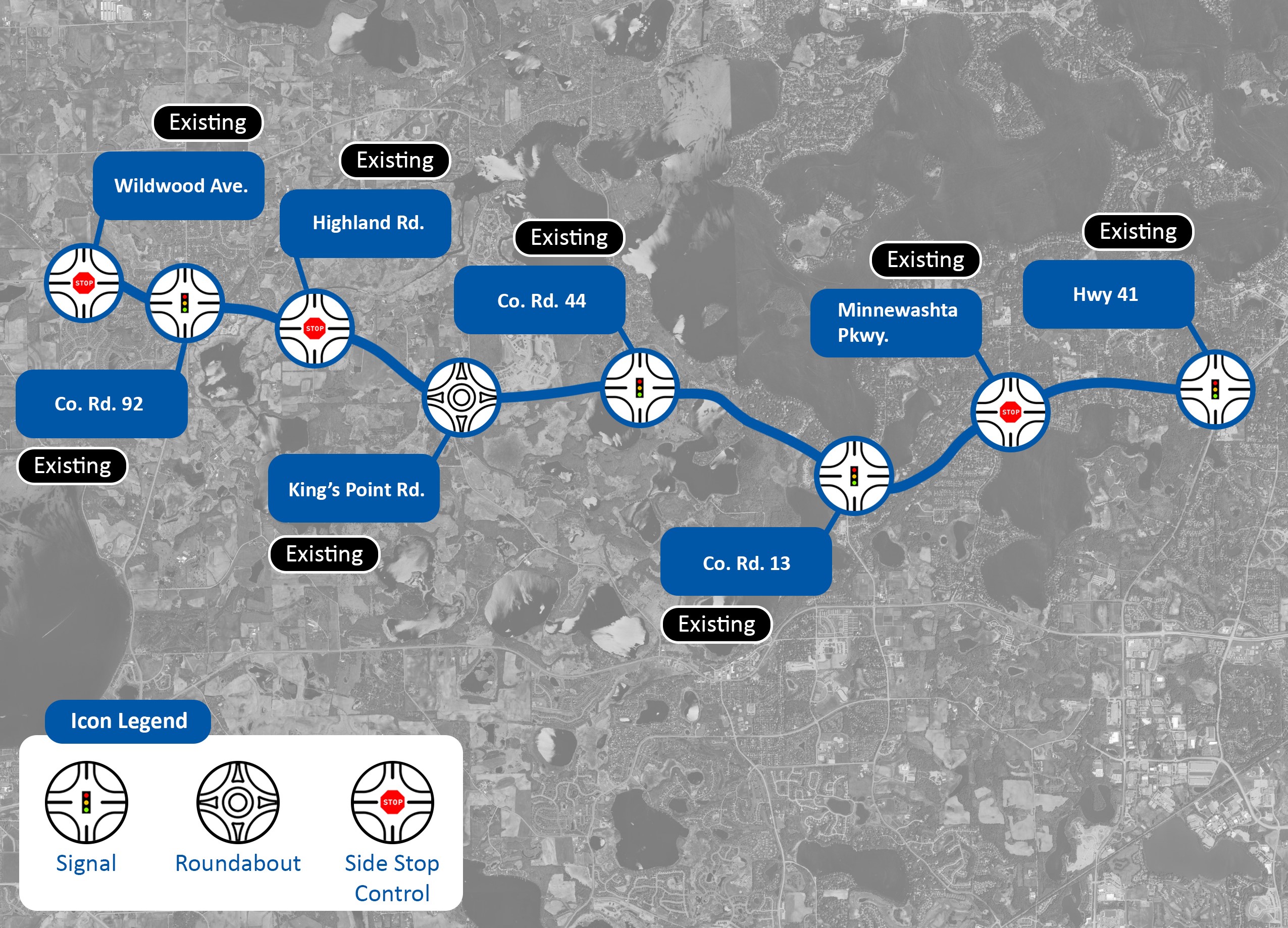
    Map of Segment 1 Alternative 1 proposed intersection improvements.View full-size image
    Key features
    • Two lane, undivided roadway between intersections 
    • Stop signs at Wildwood Ave., Highland Rd. and Minnewashta Pkwy.
    • Signals at Co. Rd. 92, Co. Rd. 44, Co. Rd. 13, and Hwy 41 
    • Single lane roundabout at King’s Point Rd.

    Benefits

    • Cost savings 
    • Minimize environmental impacts 

    Challenges

    • Minimal safety and operational benefits 

    Segment 1 Alternative 2: Roundabouts

    Key features
    • Median barrier between the intersections 
    • 3/4 intersection at Wildwood Ave. and Highland Rd.
    • Single-lane roundabouts at Co. Rd. 92, Co. Rd. 44, Co. Rd. 13, and Minnewashta Pkwy.
    • Multi-lane roundabouts at King’s Point Rd. and Hwy 41

    Benefits

    • Improved safety for intersection and main road related crashes 
    • Anticipated reduction in intersection delay 

    Challenges 

    • Longer travel distances 

    Segment 1 Alternative 3: Improved intersections

    Key features
    • Median barrier along the roadway
    • 3/4 intersections at Wildwood Ave. and Highland Rd.
    • Signalized intersection at Co. Rd. 92
    • Reduced conflict intersection (RCI)/J-turns at Co. Rd. 13, Minnewashta Pkwy. and Hwy 41
    • Roundabout at King’s Point Rd.
    • Green T at Co. Rd. 44

    Benefits

    • Improved main road travel time 
    • Improved safety for intersection and main road related crashes  

    Challenges 

    • Potential increase in off-peak side road delay 
    • Pedestrian crossing safety at non-signal locations 
    • Increased cost and impacts 
    • Longer travel distances 

    Segment 2 overview

    Segment 2 spans Hwy 7 from Hwy 41 in Shorewood to the Baker Rd. interchange in Minnetonka. The road has two lanes in each direction that are separated by a median. The biggest issues in this area are vehicle and pedestrian safety and travel time reliability.  

    There are three alternatives for Segment 2: 

    1. Alternative 1 — No build or keep as is: Hwy 7 would remain as it is today with minor safety and/or capacity improvements.

    2. Alternative 2 — At-grade intersections: An at-grade intersection is any intersection that keeps all lanes of travel at grade. This can include signals, roundabouts, reduced conflict intersection (RCI)/J-turns or other at-grade improvements. The goal of at-grade intersections is to improve safety by reducing the number and severity of angle crashes.
    3. Alternative 3 — Grade-separated intersections: Grade-separated intersections use overpasses or underpasses to keep intersecting travel lanes apart. These types of intersections are ideal for roads with high traffic volumes and significant left-turn movements. These types of intersections enhance overall capacity and support uninterrupted traffic flow in both directions along the main road. Additionally, they provide safe routes for pedestrians by allowing them to cross above or below the traffic lanes.
    4. Alternative 4 — Both at-grade and grade-separated intersections: This alternative uses a mixture of both grade-separated and at-grade intersection solutions.

    Each alternative, besides no build or keep as is, includes continuation of a concrete or grass median throughout the segment. 

    Image split in half. Top half shows a four lane highway divided by a concrete median. Bottom half shows a four lane highway divided by a grass median.


    Segment 2 performance

    Each alternative was rated using the study area needs identified in the first phase of the study. A rating of one shows minimal improvement, while a rating of three shows the most improvement. (3 = most improvement, 1 = minimal improvement)


    Segment 2 area needs

    Alternative 1
    (No build or keep as is)

    Alternative 2 (At-grade intersections)

    Alternative 3 (Grade-separated intersections)

    Alternative 4
    (Both at-grade and grade separated)

    Vehicle safety 

    1

    1

    3

    3

    Vehicle mobility 

    2

    2

    3

    3

    Walkability/bikeability

    1

    2

    3

    2

    Maintenance, cost, plan consistency

    2

    2

    1

    2

    Social, economic, and environmental considerations

    3

    2

    2

    2


    Segment 2 Alternative 1: No build/keep as is

    Key features

    • Barrier and/or median separation between travel lanes 
    • Signal intersections at Hwy 41, Oak St., Christmas Lake Rd., Old Market Rd., Vine Hill Rd., Co. Rd. 101, Tonkawood Rd. and Williston Rd.
    • Interchanges at Mill / 2nd St., I-494 and Baker Rd.(keep as is)

    Benefits

    • Cost savings  
    • Minimal environmental impact 

    Challenges

    • Minimal safety and operational benefits

    Segment 2 Alternative 2: At-grade intersections

    Key features

    • Multi-lane roundabouts at Hwy 41, Oak St., Christmas Lake Rd., Old Market Rd. and Vine Hill Rd.
    • Interchanges at Mill / 2nd St., I-494 and Baker Rd. (keep as is)
    • Continuous flow intersection at Co. Rd. 101 
    • Revised signal at Tonkawood Rd. (update signal timing)
    • Signalized reduced conflict intersection (RCI)/J-turn at Williston Rd.

    Benefits

    • Vehicle safety improvements  
    • Pedestrian safety improves at roundabouts and signalized reduced conflict intersection (RCI)/J-turn
    • Lower cost than freeway with grade-separated crossings

    Challenges

    • Lower overall safety benefit than freeway 
    • Main road mobility challenge 
    • Pedestrian/bicycle crossings at-grade with vehicle

    Segment 2 Alternative 3: Grade-separated intersections 

    Key features  

    • Interchanges at Hwy 41, Oak St., Mill / 2nd St. (keep as is), Vine Hill Rd., Co. Rd. 101, Williston Rd., I-494 (keep as is) and Baker Rd. (keep as is)
    • Right-in / right-out at Christmas Lake Rd. and Old Market Rd.
    • Grade separation at Tonkawood Rd .

    Benefits

    • Greatest safety and mobility improvements
    • Remove main road crossing conflicts between pedestrian/bicycle and vehicle

    Challenges 

    • Highest cost 
    • Highest impacts  
    • Difficult to implement  

    Segment 2 Alternative 4: Both at-grade and grade separated intersections 

    Key features

    • Multi-lane roundabouts at Hwy 41, Oak St., Christmas Lake Rd. and Old Market Rd.
    • Interchanges at Mill / 2nd St. (keep as is), Williston Rd., I-494 (keep as is), and Baker Rd. (keep as is)
    • Grade separations at Vine Hill Rd. and Tonkawood Rd.

    Benefits

    • Optimized mobility and safety based on traffic volumes  
    • Improved bike and pedestrian safety  

    Challenges

    • High cost and impact for freeway segment  


    Public input

    We gathered feedback from the public on the study design alternatives from May to June in 2025 through community pop-ups, an online public meeting and an online survey. Your feedback was used to evaluate the design alternatives and help select the recommended improvements. Multiple communication methods were used to reach the public, including emails, social media and partner social media and communications and community pop-up events.

    The survey was open to the public for four weeks from May 5, 2025, to June 4, 2025. In total, there were: 

    • 775 responses to the online survey 
    • 93 discussions held through community pop-ups 
    • 58 online public meeting attendees  
    • 29 comments submitted  

    Segment 1 feedback

    • 55% either strongly agree or agree that the roundabout option was preferred, compared to 25% for other intersection improvements or 15% for leaving the road as-is.

    Segment 2 feedback

    • 60% either strongly agreed or agreed that the hybrid option was preferred, compared to 14% for leaving the road as is, 36% for at-grade improvements, 66% for grade-separated improvements

  • Engagement summary and study area needs

    Share Engagement summary and study area needs on Facebook Share Engagement summary and study area needs on Twitter Share Engagement summary and study area needs on Linkedin Email Engagement summary and study area needs link

    We gathered feedback from the public on the current conditions along and across Hwy 7, including safety and mobility concerns with an online survey and comment map in June and July of 2024. Thank you to everyone who participated in the survey and comment map. Your feedback helped us understand your experiences of Hwy 7 and ideas for improvement. The survey and comment map closed on Sun, July 7, 2024. If you missed the deadline and would still like to submit your feedback, you can leave a comment or question or reach out to the Hwy 7 study team at hwy.7.study.info@state.mn.us or 651-234-7505.


    What people said

    According to the survey results, 60% of survey respondents use Hwy 7 daily, while 30% of respondents use Hwy 7 multiple times per week. Ninety (90) percent of all survey respondents are frequent users of Hwy 7.


    According to the survey results, 52% of respondents reported that driving conditions do not feel safe or comfortable on the road, 75% of respondents said that walking conditions are not safe or comfortable and 71% of respondents said that biking conditions are not safe or comfortable along Hwy 7.

    Looking to the future of Hwy 7, we asked participants to rate the importance of several elements. The results for those who marked these elements as “Important” and “Very important” are as follows:

    • Safer intersections: 93%
    • Reduced congestion: 87%
    • Fewer driveway conflicts: 68%
    • Better pedestrian facilities: 66%
    • More environmentally friendly roadway: 57%
    • Better access to businesses: 56%
    • Better bike facilities: 48%

    The top 10 themes mentioned in the survey were:

    • Traffic
    • Congestion
    • Speed and traffic violations
    • Infrastructure improvements
    • Public transit
    • Environmental preservation
    • Community connectivity
    • Safety
    • Pedestrian and bicyclist safety
    • Noise

    Read the full engagement summary.


    Study area needs

    As a part of the Hwy 7 study, we also gathered and analyzed information about the study area. This included existing community plans, traffic counts, crash history, and road operations. Based on this analysis, we identified the following needs for the study area:

    • Vehicle safety: Vehicle safety is an identified need along Hwy 7. This is documented in the history of fatal and severe injury crashes that have occurred. Multiple intersections exceed statewide averages for crashes and severity. The most severe crash types are lane departure crashes and angle crashes at intersections.
    • Vehicle mobility: Vehicle mobility is an identified need along Hwy 7. There is a high level of side street delay at both signalized and unsignalized intersections. Mainline delay exists at multiple intersections along the road and is anticipated to increase in the future.
    • Walkability / bikeabilty: Walkability and bikeability is a need along Hwy 7 due to the poor safety performance including fatalities as well as the difficulty crossing and traveling along the highway. Hwy 7 is also identified in several local and regional plans to improve mobility for multiple modes of transportation along the road.
  • Accessibility

    Share Accessibility on Facebook Share Accessibility on Twitter Share Accessibility on Linkedin Email Accessibility link

    Americans with Disabilities ActSpeakers and raised arrows on APS signals provide information about the intersection to pedestrians with hearing and visual impairment.
    Speakers and raised arrows on APS signals provide information about the intersection to pedestrians with hearing and visual impairment.

    All MnDOT projects - both new construction and rehabilitation projects - must include evaluation to ensure compliance with the Americans with Disabilities Act. Components can include, but are not limited to adding curb cuts, truncated domes and accessible pedestrian signals. Read about MnDOT's transition plan to comply with the ADA.

    Specifics for this study


    • Determine what accessibility improvements are needed for a 2029 resurfacing project
Page last updated: 10 Feb 2026, 06:47 AM