
What We Heard In Engagement Phase 2
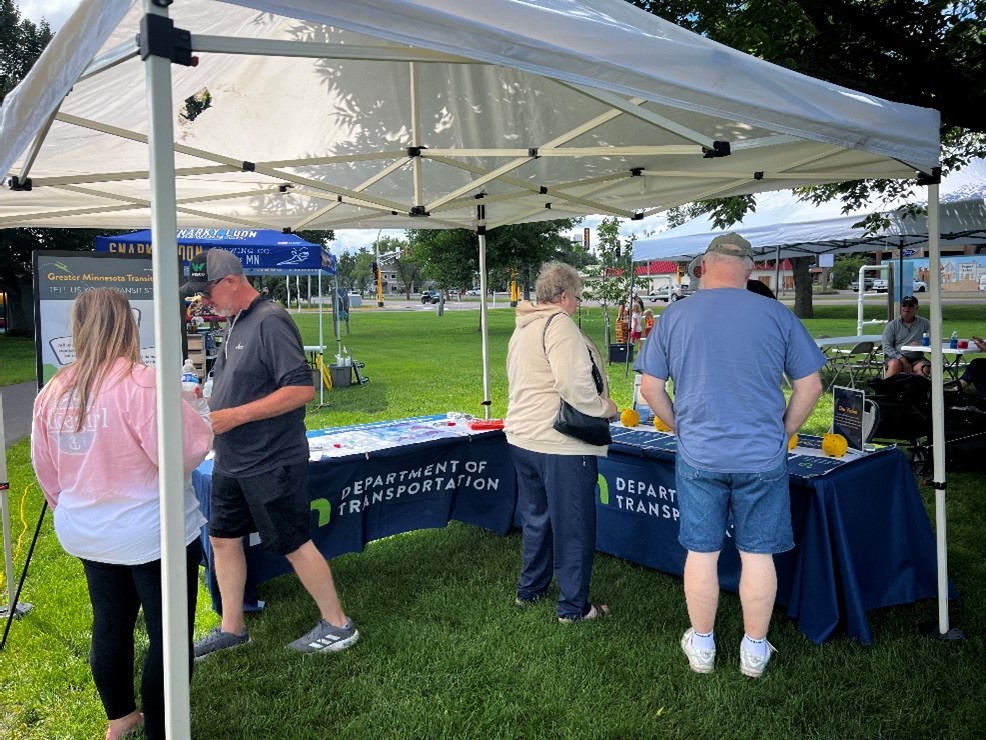
The second phase of engagement for the Greater Minnesota Transit Plan focused on gathering in-depth feedback on user experiences, where they can and cannot use transit, and collecting input on draft engagement goals. We worked with communities at 13 local events, hosted five community listening sessions and 3 1-on-1 interviews, held one meeting with our RIDE Advisory Task Force, and received over 800 survey responses. Below is a summary of what we heard:
Reliability – Unreliable transit makes it difficult for users to perform daily tasks such as shopping, medical appointments, and social interactions. Many people shared stories about the bus not showing up, being canceled, or arriving late, leaving them stranded and scared about how to get home. Others cited unreliability as a reason they do not use public transit even if they have a desire to.
Frequency and service times – For those with transit in their town, people across Minnesota shared that scheduling and frequency pose significant barriers. People said that the bus runs during typical work hours, with very limited or no service on the weekends or evenings. This lack of service makes it difficult to meet their personal needs or provide opportunities for social experiences.
Access to information – There is a desire for information about transit options to be shared more widely, especially with those who need it to prevent isolation, such as seniors and people with disabilities. There is also a need for information to be shared in other languages, as well as options to speak with staff in languages other than English, to improve user experience and increase access to transit.
Improved connection – People consistently shared that it is almost impossible to access neighboring cities or rural areas outside the city in which they live. People want to see more access to the Twin Cities, larger neighboring cities, and rural areas to increase access to employment, medical care, and airports.
Convenience – People who do not use transit frequently mentioned that it isn't convenient enough to use, and they would prefer to drive their personal vehicle.
Perception of transit – Negative perception of transit was often mentioned as a reason transit struggles to be prioritized in Minnesota. People would like to see more effort put towards changing people's perception to encourage more riders and improvements to the overall system.

Thank you for your contribution!
Help us reach out to more people in the community
Share this with family and friends